
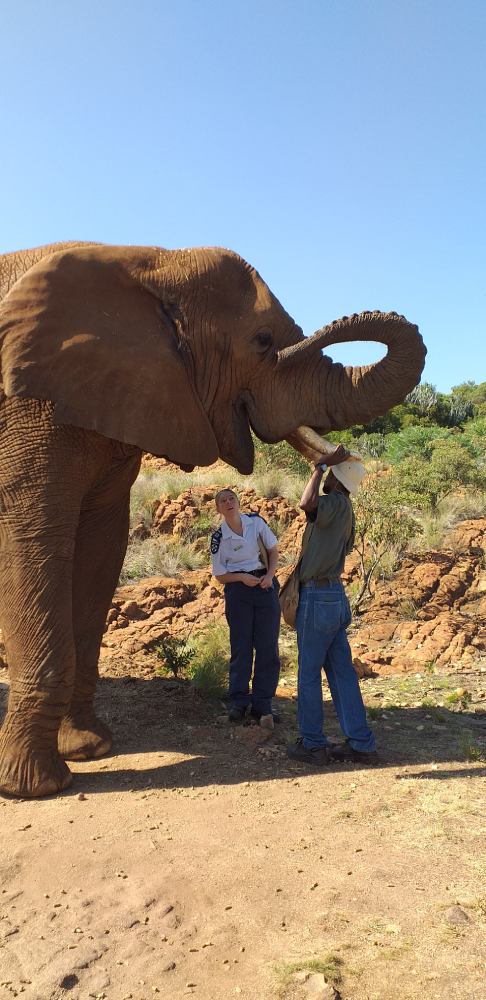
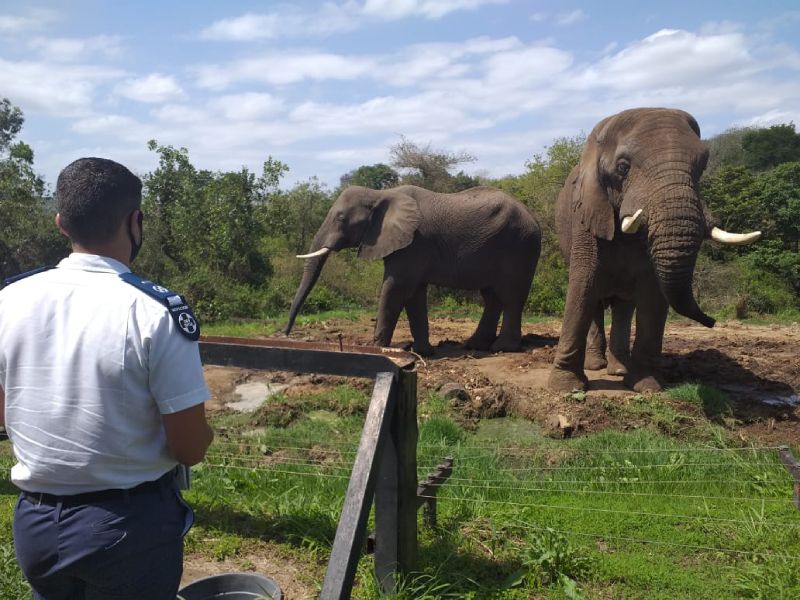
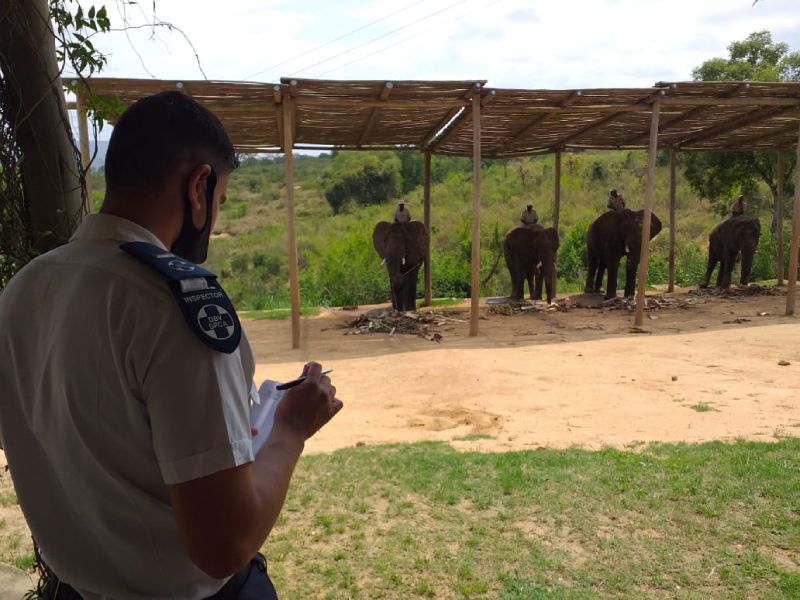
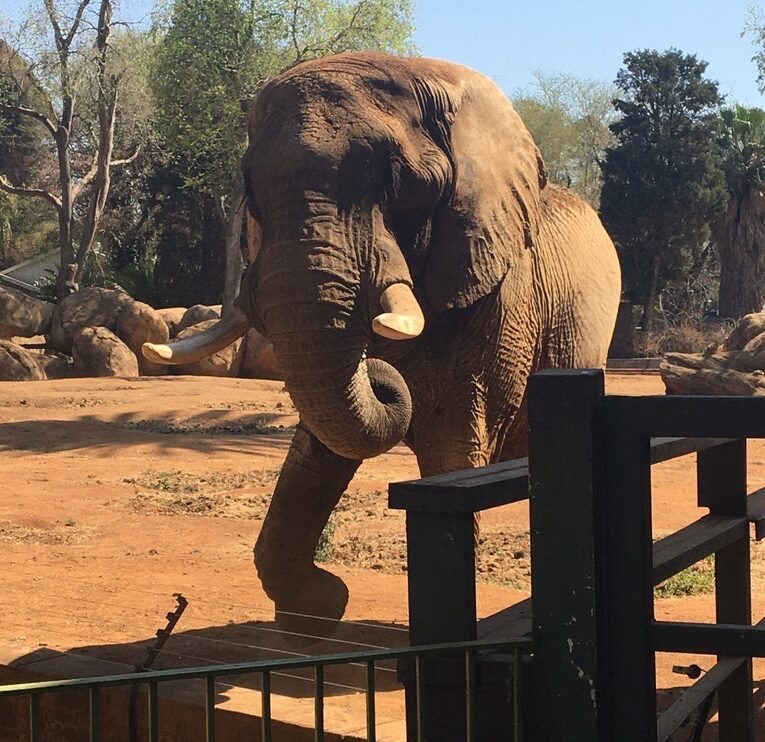
The NSPCA’s Wildlife Protection Unit undertakes unannounced proactive and reactive inspections at facilities that keep elephants in captivity on an ongoing basis and we are the only organisation undertaking this work.
Because elephants are kept in captivity and trained to respond to commands, some people erroneously believe that elephants under the care of humans are domesticated or semi-domesticated. Domestication is defined as the process by which a population of animals become adapted to man and to the captive environment by genetic changes occurring over generations and environmentally induced developmental events occurring during each generation.
Although elephants have been kept by humans for thousands of years they have been, on the whole, poached directly from the wild, with perhaps one generation (or rarely two) being bred in captivity. Even though they have undergone some degree of training; a process removing the tendency to flee in the presence of man, this process takes place within an animal’s own lifetime. Domestication is a breeding process where you select the characteristics you want and breed the animals with those characteristics over many generations. This has never been done with elephants.
Elephants are NOT domesticated. You cannot domesticate an individual animal during its lifespan. Because all captive elephants are not domesticated animals, whilst kept in captivity:
- They are vulnerable to sudden outbursts of human targeted aggression, leading to injuries and fatalities
- They undergo a cruel and painful process to break their will to accept human control
- They are susceptible to the development of health and behavioural problems.
The keeping of elephants in conditions conducive to their welfare in captivity is not possible because they are not domesticated, and they are large, intelligent, socially complex and demanding animals.
The initial training of elephants for submission to human control used in circuses, elephant back safaris and interaction-based entertainment of tourists is extremely cruel.
Many of the activities they are made to do are physically and psychologically damaging and stressful. Captive breeding must be seen with scepticism and as potentially counterproductive for conservation purposes and occurs with difficulty. Read more here.
Related Articles and News
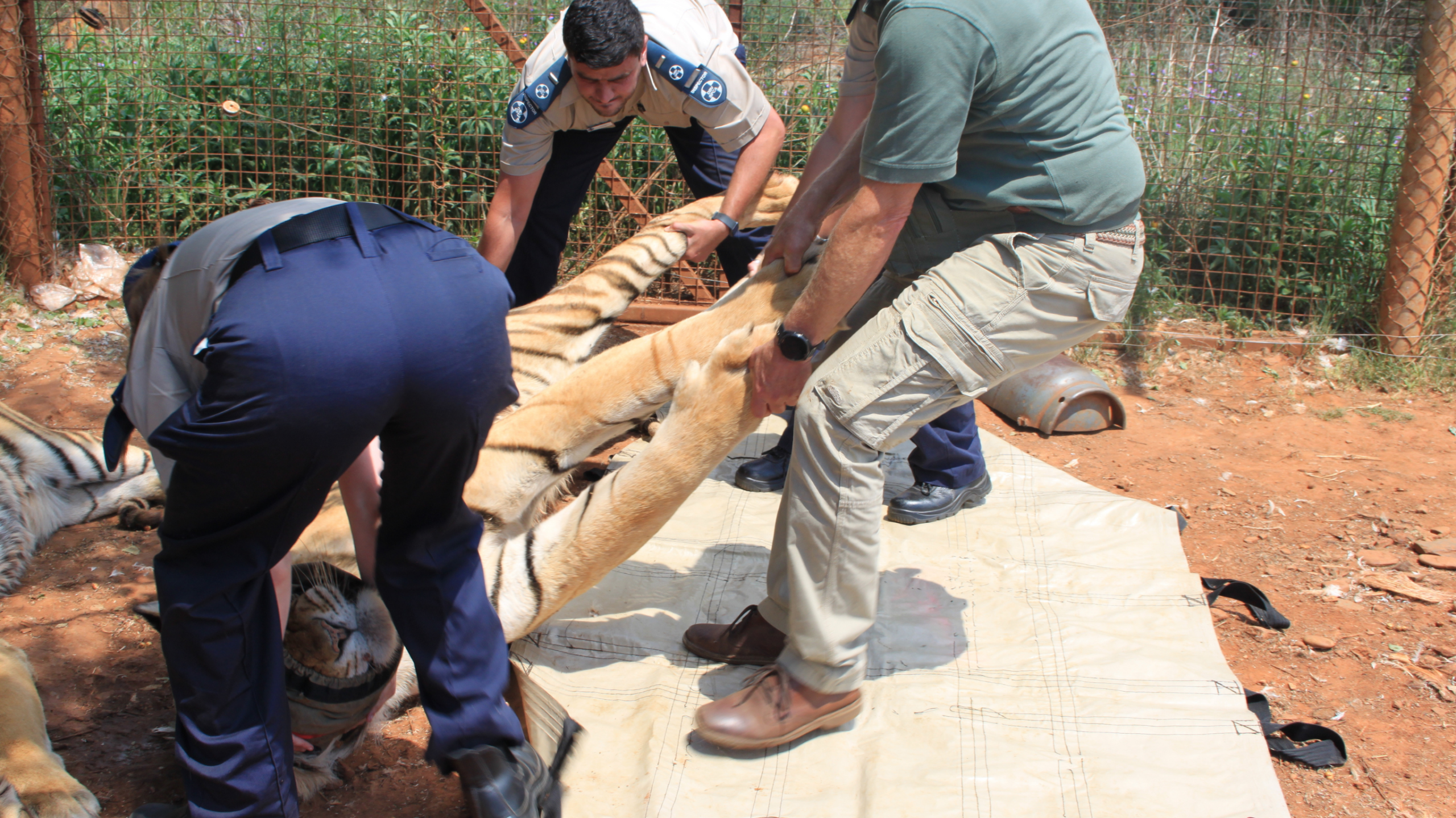
NSPCA Seizes Tigers, Serval from Squalid Predator Facility
The National Council of SPCAs (NSPCA) has seized three Bengal tigers, and a serval from a captive predator breeding facility in the North West. Two tigers were kept in [...]
ConCourt Rules: Animal ‘Well-being’ Stays
The Constitutional Court today dismissed an application, opposed by the National Council of SPCAs (NSPCA), in which the South African Hunters and Game Conservation Association (SA Hunters) sought to [...]
SAPS Dog Sky: NSPCA To Lay Cruelty Charges Against Officials
The National Council of SPCAs (NSPCA) will open a docket for contraventions of the Animals Protection Act 71 of 1962 against officials in the South African Police Service (SAPS), [...]