The National Council of SPCAs (NSPCA) has again raised serious concerns before the Parliamentary Portfolio Committee for the Department of Forestry, Fisheries, and the Environment (PPCFFE) regarding the North West Parks and Tourism Board’s (NWPTB) continued failure to comply with a direct parliamentary instruction to include the NSPCA in the Provincial Elephant Task Team (PETT) and to provide minutes from PETT meetings.
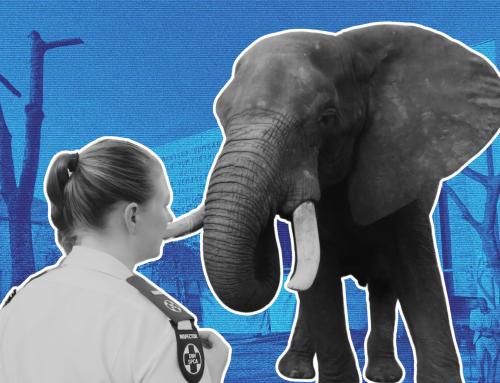
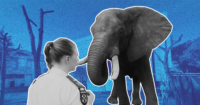
The NSPCA first documented severe ecological decline at Madikwe Game Reserve in the North West in December 2024. Decades of mismanagement and inaction had produced a critically degraded environment unable to sustain the existing population of large herbivores, in particular elephants. During inspections conducted in late 2024, NSPCA Inspectors encountered an elephant calf so weakened it was unable to move and was humanely euthanised. Two further elephants were humanely euthanised on a subsequent inspection due to their extremely poor condition. A similar situation was recorded at Pilanesberg Nature Reserve, also in the North West.
At a PPCFFE meeting on 18 September 2025, North West authorities were instructed to include the NSPCA in all future PETT meetings and to submit relevant documentation to the Committee. That instruction has not been complied with. During the PPCFFE on 19 May 2026, it was confirmed that the PETT last convened in November 2025. The NSPCA has received no formal meeting invitation and no minutes from PETT proceedings.
The NWPTB has indicated that culling, through trophy hunting, is under consideration as a mechanism for both population control and revenue generation. The NSPCA firmly opposes culling as a first resort, especially when there is a non-lethal, humane alternative immediately available at no cost from the Humane World for Animals – South Africa. The Elephant Norms and Standards, gazetted under the National Environmental Management: Biodiversity Act (NEMBA), identify culling as a last resort.
“Any decision to cull must be made with appropriate care, due diligence, and consultation with external experts, including welfare specialists such as the NSPCA,” said Chief Inspector Douglas Wolhuter, Manager of the NSPCA’s Wildlife Protection Unit. “Culling cannot be used as a revenue model.”
The NSPCA has also drawn the PPCFFE’s attention to a potential El Niño weather event expected to intensify from mid-2026, with forecasts indicating below-average rainfall and higher temperatures for the 2026-2027 summer rainfall season. These conditions have the potential to reduce available browsing material further and accelerate ecological degradation at both reserves.
The NSPCA calls on the NWPTB and the PETT to comply with parliamentary instruction without further delay, to provide all outstanding documentation, and to engage transparently and inclusively in the management of elephant populations. The welfare of these highly intelligent and sentient animals is not a matter the NSPCA will allow to be set aside.
If you are as passionate about animals and their well-being as we are, consider supporting our causes by donating.
Latest News Posts

Will You Be the One Who Takes Action?
Most people will scroll past this. But will you be the one who stands up for animals?
Animal welfare isn’t always in the spotlight, but it changes lives – for every neglected, abused, or suffering animal we help. Our teams work tirelessly, often behind the scenes, ensuring animals across South Africa are protected.
This work is relentless. The challenges are immense. But with more hands, hearts, and resources, we can do even more.
The equation is simple: the more supporters we have, the greater our reach, the stronger our impact.
Be part of the change. Become an NSPCA Project Partner today. From just R50 per month, you can help ensure that no animal suffers in silence.